
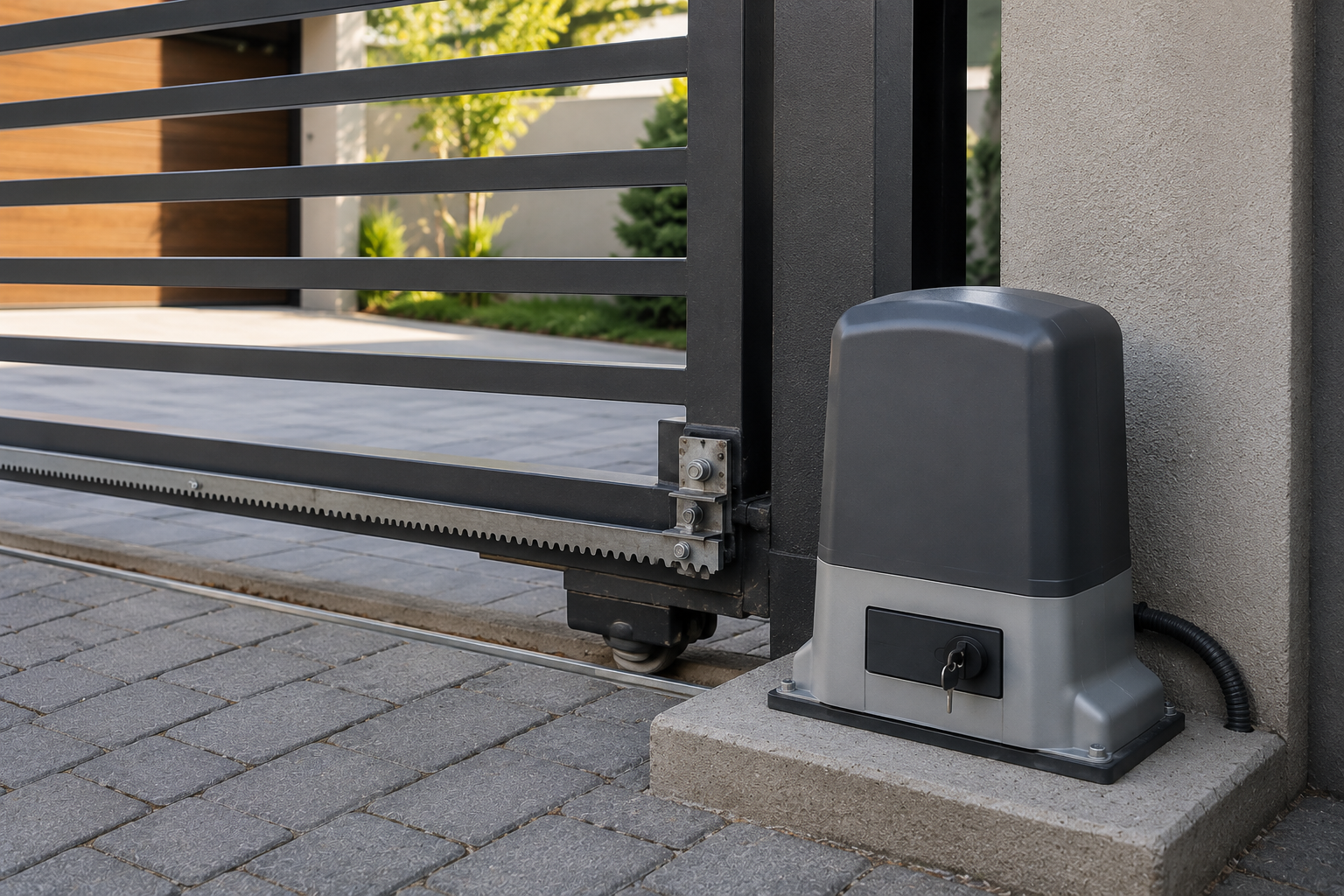
Few things are more frustrating than pressing your remote and finding that the gate simply refuses to open. Whether you are trying to leave for work, get into your property late at night, or secure your home during load shedding, a gate motor that suddenly stops working can quickly become a major inconvenience.
In Gauteng, gate motor problems are extremely common because these systems work hard every day. Frequent power interruptions, weather exposure, dust, worn components, and lack of maintenance all contribute to breakdowns over time. The good news is that not every gate motor problem means the entire system needs replacement. In many cases, the issue is something relatively simple that can be identified early before it turns into a more expensive repair.
Before assuming the motor has failed completely, there are a few important things worth checking first. Some problems can be resolved quickly, while others may require professional repairs to avoid further damage.
Book Professional Gate Motor Repairs
Check the Power Supply First
One of the most overlooked causes of a gate motor not opening is a basic power problem. Many homeowners immediately assume the motor itself has failed, when in reality the system may simply not be receiving electricity properly.
Start by checking whether there is power to the property and whether other electrical systems are functioning normally. If load shedding recently occurred, the gate motor battery may not have had enough time to recharge fully afterward.
It is also worth checking the main distribution board to see if a breaker has tripped. Power surges sometimes trip circuits connected to automated gate systems, especially during storms or after sudden power restoration.
Loose wiring can also interrupt the power supply to the motor. In some cases, rodents, moisture, or aging electrical connections may damage cables over time. If the motor appears completely unresponsive with no sound or light indicators, an electrical issue is often the first place to investigate.
Modern gate motors usually include indicator lights that help identify power-related faults. If all lights are off, the issue may be related to electricity supply rather than the motor itself.
Battery Problems During Load Shedding
Load shedding has become one of the leading causes of gate motor failures across Gauteng. Even when the motor itself is still functional, a weak or damaged battery can prevent the gate from operating properly.
Gate motor batteries constantly charge and discharge during outages. Over time, they lose their ability to hold charge effectively. This is especially common with older batteries or systems that experience multiple outages daily.
A failing battery may cause the gate to open slowly, stop halfway, or become completely unresponsive during outages. Some homeowners also notice clicking sounds from the motor without any movement from the gate itself.
Many homeowners continue replacing batteries repeatedly without realising that the charging system or control board may also be damaged. If batteries fail unusually often, it may indicate a deeper electrical problem inside the motor system.
Battery replacement is sometimes enough to restore operation, but older motors that struggle with modern load shedding demands may eventually require larger repairs or full replacement.
Natural internal linking opportunity: homeowners dealing with repeated failures often explore gate motor replacement options when battery issues become constant.
Remote Control Problems Are More Common Than You Think
Sometimes the problem is not the gate motor itself but the remote control or receiver system.
Remote batteries can die unexpectedly, especially if they have not been replaced for a long time. Before assuming the motor is faulty, it is worth testing another remote if one is available.
Signal interference can also affect operation. Nearby electronic devices, damaged receivers, or electrical faults may interrupt communication between the remote and the motor.
In some situations, the remote may lose programming after power interruptions or surges. Reprogramming the remote often resolves the issue quickly.
A damaged receiver board inside the motor can also prevent the system from responding. This is especially common after lightning strikes or electrical surges during storms.
If the gate works manually but refuses to respond to remotes consistently, the issue is often linked to the receiver system rather than the motor itself.
Check for Physical Obstructions
Gate motors are designed with safety systems that prevent operation when resistance or obstructions are detected. Even a small obstruction along the gate track can stop the motor from functioning properly.
Dirt, stones, leaves, broken rollers, or damaged racks can all interfere with smooth movement. Gauteng properties often experience dust buildup and debris accumulation, especially during windy conditions.
A gate that has shifted slightly out of alignment may also place extra strain on the motor. In these situations, the motor may attempt to move the gate but stop automatically to prevent damage.
Manually inspecting the gate track can sometimes reveal obvious issues that are easy to resolve. If the gate feels unusually heavy or difficult to slide manually, there may be an underlying mechanical problem rather than an electrical fault.
Ignoring alignment problems can eventually damage the motor itself because the system is forced to work harder than intended.
When the Motor Overheats
Gate motors can overheat if they are used excessively or forced to operate under strain for long periods.
This often happens because the gate is too heavy for the motor, the track is damaged, the motor is aging, or the installation was not done properly. Worn components can also force the motor to work harder than it should.
Most modern motors include thermal protection systems that temporarily shut the motor down when overheating occurs. This prevents permanent internal damage but leaves the gate unresponsive until the motor cools down.
Homeowners sometimes mistake this temporary shutdown for complete motor failure.
Frequent overheating is usually a warning sign that something else within the gate system requires attention. Continuing to ignore the issue may eventually lead to more expensive repairs or full motor replacement.
Control Board Problems Can Stop the Entire System
The control board is essentially the brain of the gate motor system. It controls communication between the remote, battery, motor, safety beams, and other components.
Power surges, moisture damage, insects, and electrical faults can all damage the control board over time. Once this happens, the gate may behave unpredictably or stop responding entirely.
Common symptoms of a damaged control board include flashing error lights, remotes failing to respond, intermittent operation, or the gate opening and closing randomly without warning.
Diagnosing control board faults usually requires professional testing because the symptoms often resemble battery or wiring issues.
In some cases, replacing the board is enough to restore the system. In older motors, however, sourcing replacement boards may become difficult or expensive.
Book Professional Gate Motor Repairs
Signs You May Need Professional Repairs
While some minor issues can be identified easily, many gate motor problems require proper technical inspection to avoid causing further damage.
There are certain warning signs that should never be ignored for too long.
- Repeated breakdowns
- Burning smells
- Loud grinding noises
- Visible electrical damage
- Inconsistent gate movement
- The gate reversing unexpectedly
- Complete loss of power despite battery replacement
Attempting DIY electrical repairs without proper knowledge can damage sensitive components or create safety risks.
Professional technicians can usually identify the real source of the problem much faster because they can test the motor, control board, battery system, receiver, and gate alignment together rather than guessing at individual parts.
Natural internal linking opportunity: emergency gate repair services are often needed when motors fail unexpectedly after hours or during security emergencies.
How to Prevent Gate Motor Problems
Many gate motor failures develop gradually over time rather than happening suddenly. Regular maintenance helps identify small problems before they become major breakdowns.
Keeping the gate track clean, checking battery condition regularly, and servicing moving components can significantly extend the lifespan of the motor system.
Professional servicing is especially important for gates exposed to heavy daily use or frequent load shedding. Small alignment problems, worn rollers, or weak batteries can place unnecessary strain on the motor for months before obvious failure occurs.
High-quality installation also makes a major difference. Poorly aligned gates and low-quality electrical work often lead to repeated repairs and shorter motor lifespan.
Homeowners who invest in proper installation and regular servicing usually experience fewer unexpected breakdowns and lower long-term repair costs.
Conclusion
A gate motor that suddenly stops opening does not always mean the entire system needs replacement. In many cases, the problem may be related to the power supply, battery, remote system, gate alignment, or another component within the automation setup.
Checking a few basic issues first can sometimes save time and prevent unnecessary repair costs. However, recurring breakdowns, electrical faults, or overheating problems should be inspected professionally before more serious damage develops.
Because gate motors play such an important role in property security and daily convenience, quick diagnosis and proper repairs are important. Addressing problems early usually helps avoid more expensive failures later.
0 Comments