
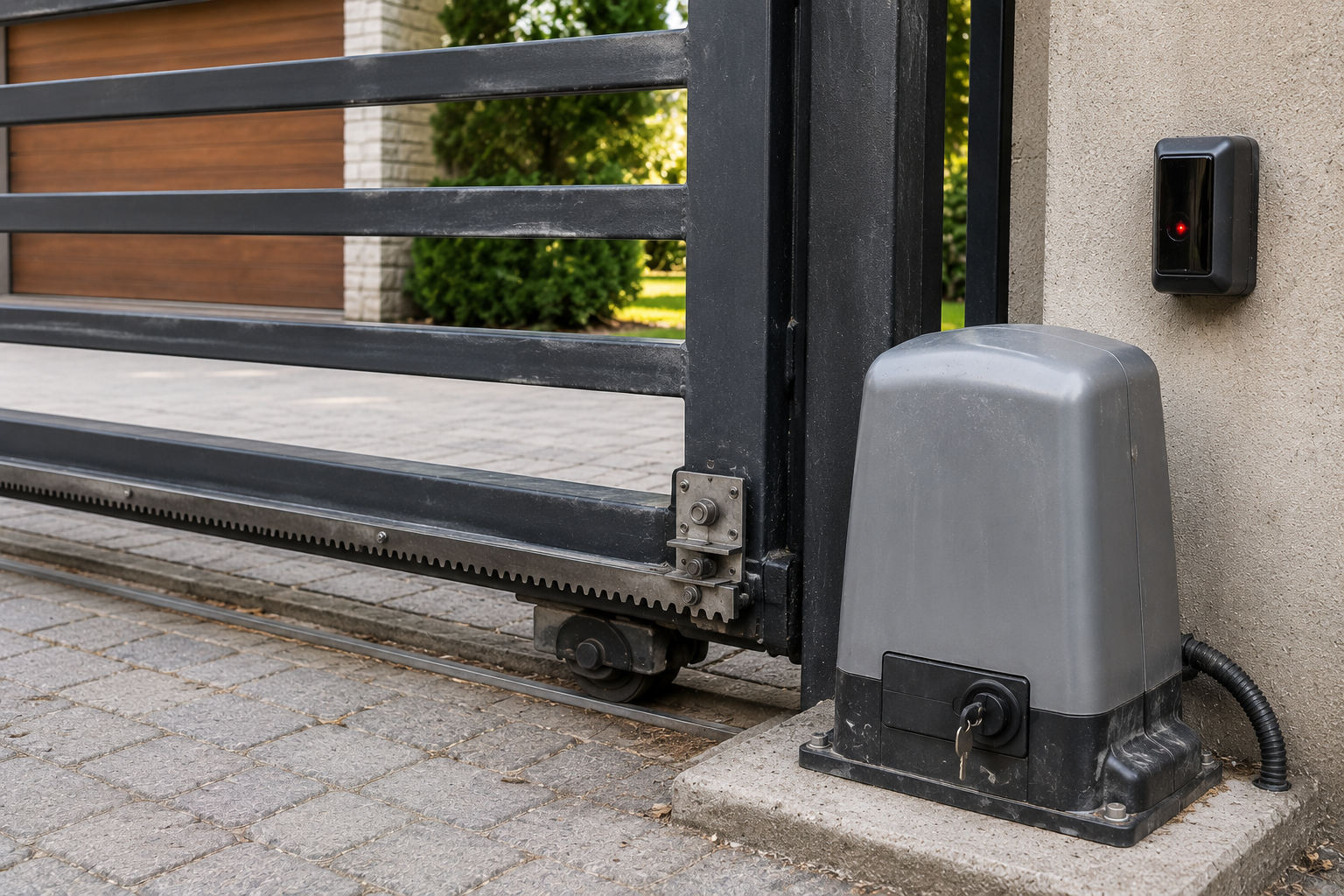
A gate that refuses to close properly is more than just frustrating. It becomes a serious security problem very quickly. Many homeowners only realise how important a fully functioning gate motor is when the gate suddenly stops halfway, reverses unexpectedly, or remains open late at night.
In Gauteng, gate motors experience constant strain from daily use, changing weather conditions, dust buildup, and regular power interruptions. Over time, even small issues inside the system can affect the gate’s ability to close correctly. In some cases, the problem is minor and easy to fix. In others, the gate motor may already be developing more serious mechanical or electrical faults.
One of the biggest mistakes property owners make is ignoring small closing problems for too long. A gate that occasionally reverses or stops midway often worsens over time, eventually leading to complete failure or damage to the motor itself.
Fortunately, there are several common causes that can usually explain why a gate motor is no longer closing properly.
Book Professional Gate Motor Repairs
Why Gates Suddenly Stop Closing Properly
When a gate motor starts developing closing problems, the issue is often linked to resistance somewhere within the system. Modern gate motors include safety mechanisms that stop or reverse the gate when resistance is detected. This helps prevent injuries and damage, but it also means even small mechanical issues can interrupt normal closing.
In some cases, the gate may close halfway before stopping. Other systems reverse completely just before reaching the closed position. Some gates refuse to close at all, even though they still open normally.
These symptoms are often caused by alignment issues, faulty safety beams, worn rollers, electrical faults, or incorrect motor settings. Because several different components work together during the closing cycle, diagnosing the exact cause sometimes requires a full inspection of the system.
Safety Beam Problems Are Extremely Common
Safety beams are one of the most common reasons a gate refuses to close properly.
These beams are designed to detect objects or movement in the path of the gate. If the beam senses an obstruction, the gate motor automatically stops or reverses the closing cycle to prevent accidents.
The problem is that safety beams can become extremely sensitive over time. Dust, rain, insects, moisture, direct sunlight, or slight movement in the beam alignment may interrupt the signal and prevent the gate from closing.
In many Gauteng properties, dirty or misaligned beams are responsible for repeated gate closing problems. Homeowners sometimes assume the motor itself has failed when the real issue is simply the safety beam system.
Damaged wiring connected to the beams can also create intermittent faults where the gate works normally one moment and refuses to close the next.
Cleaning the beam lenses and checking alignment sometimes resolves the issue, but recurring beam problems may require professional adjustment or replacement.
Gate Alignment Problems Can Affect Closing
A sliding gate must move smoothly along its track to close correctly. Even slight alignment problems can place additional strain on the motor and interrupt the closing cycle.
Over time, gates may shift because of:
- ground movement
- worn rollers
- damaged tracks
- loose brackets
- impact damage
- poor installation
When this happens, the motor senses abnormal resistance and may stop automatically to protect the system from damage.
Some gates become difficult to slide manually long before the motor fails completely. Homeowners may notice jerking movement, scraping sounds, or uneven closing before the problem becomes severe.
Ignoring alignment problems can eventually damage the motor because the system is forced to work harder than intended during every closing cycle.
Natural internal linking opportunity: professional gate motor repairs often include full gate alignment inspections to prevent repeated automation failures.
Obstructions Along the Gate Track
Small obstructions are another common cause of closing issues.
Leaves, stones, dirt buildup, broken rollers, or even small objects trapped along the gate track can interfere with smooth movement. Because modern gate motors are designed to stop when resistance is detected, even minor obstructions may interrupt operation.
This is especially common during windy weather or after storms when debris collects along the track area.
Rust buildup can also create resistance over time, particularly on older gates exposed to moisture and weather conditions regularly.
Many homeowners overlook the gate track completely when troubleshooting motor problems. A quick inspection of the track and moving components can sometimes identify obvious issues before unnecessary repairs are booked.
Incorrect Motor Force Settings
Gate motors rely on force settings that control how much resistance the motor will tolerate before stopping or reversing.
If these settings are incorrect, the gate may reverse too easily or stop before reaching the fully closed position.
This often happens after:
- previous repair work
- power surges
- control board resets
- incorrect programming
- motor upgrades
Some systems become overly sensitive and interpret normal resistance as an obstruction. Others may apply too much force, placing strain on the gate system and creating safety risks.
Adjusting force settings usually requires technical knowledge because incorrect calibration can damage the gate or reduce safety protection.
In many cases, homeowners accidentally worsen the issue by adjusting settings without understanding how the motor system operates.
Load Shedding and Power Problems
Load shedding continues to affect gate motor reliability throughout Gauteng.
Power interruptions place constant strain on batteries, charging systems, and electronic components. After repeated outages, some gate motors begin developing unpredictable closing problems.
Weak batteries may provide enough power for the gate to open but not enough for the full closing cycle. Some motors lose calibration settings after power surges, while others experience intermittent control board faults.
Older gate motors are particularly vulnerable because many were not designed for the frequency of outages currently experienced in South Africa.
In some situations, the motor may function normally during daytime operation but struggle at night after battery drainage during outages.
Natural internal linking opportunity: homeowners experiencing repeated load shedding-related issues often consider gate motor replacement for improved reliability.
Worn Rollers and Mechanical Resistance
Gate rollers carry the full weight of the gate as it moves along the track. Once rollers begin wearing out, the gate becomes increasingly difficult to move smoothly.
Worn rollers often create:
- grinding noises
- uneven movement
- shaking during closing
- resistance near certain points
- excessive motor strain
Because the motor must work harder to move the gate, the system may stop or reverse automatically during closing.
Mechanical resistance problems are often gradual. The gate may initially close inconsistently before eventually refusing to close properly altogether.
Regular maintenance helps identify worn rollers before they place excessive strain on the motor system.
Control Board Faults Can Interrupt the Closing Cycle
The control board controls the entire gate motor operation, including opening, closing, safety responses, and communication between components.
When the control board begins failing, the gate may behave unpredictably. Some systems reverse randomly, stop halfway, or ignore closing commands completely.
Electrical surges, moisture exposure, insects, and aging components are common causes of control board damage.
Diagnosing these faults can be difficult because the symptoms often resemble battery problems, alignment issues, or safety beam faults.
In some cases, replacing the control board restores normal operation. In older systems, however, replacement parts may become difficult to source, making motor replacement a more practical long-term solution.
Book Professional Gate Motor Repairs
Signs You Need Professional Gate Motor Repairs
Some gate motor issues can be identified early, but certain warning signs usually indicate that professional repairs are necessary.
- The gate repeatedly reverses before closing
- Grinding or scraping noises are becoming louder
- The gate stops in different positions each time
- Safety beams continue failing after cleaning
- The motor overheats frequently
- The gate struggles more during load shedding
- The system behaves unpredictably
Attempting DIY electrical or programming repairs can sometimes create larger problems, especially when sensitive electronic components are involved.
Professional technicians can test the battery system, control board, motor settings, alignment, and safety systems together to identify the true cause of the problem.
Preventing Future Gate Closing Problems
Many gate motor problems develop slowly over time rather than happening suddenly. Routine maintenance is one of the best ways to prevent unexpected failures.
Keeping the track clean, checking rollers regularly, servicing moving components, and inspecting electrical systems can significantly improve reliability.
Properties exposed to heavy daily traffic often require more frequent servicing because the gate system experiences greater mechanical strain.
Good installation quality also makes a major difference. Gates that are properly aligned and correctly automated usually experience fewer closing problems long term.
Homeowners who address small issues early generally avoid the larger repair costs associated with neglected systems.
Conclusion
A gate motor that refuses to close properly is often a sign that something within the system requires attention. Safety beam faults, alignment issues, worn rollers, electrical problems, and control board failures can all interfere with the closing cycle.
Although some minor issues are easy to identify, recurring closing problems should not be ignored for too long. Continuing to operate a struggling gate motor may eventually lead to more serious damage and costly repairs.
Early diagnosis and professional repairs usually help restore smooth operation while preventing further strain on the motor system.
0 Comments