
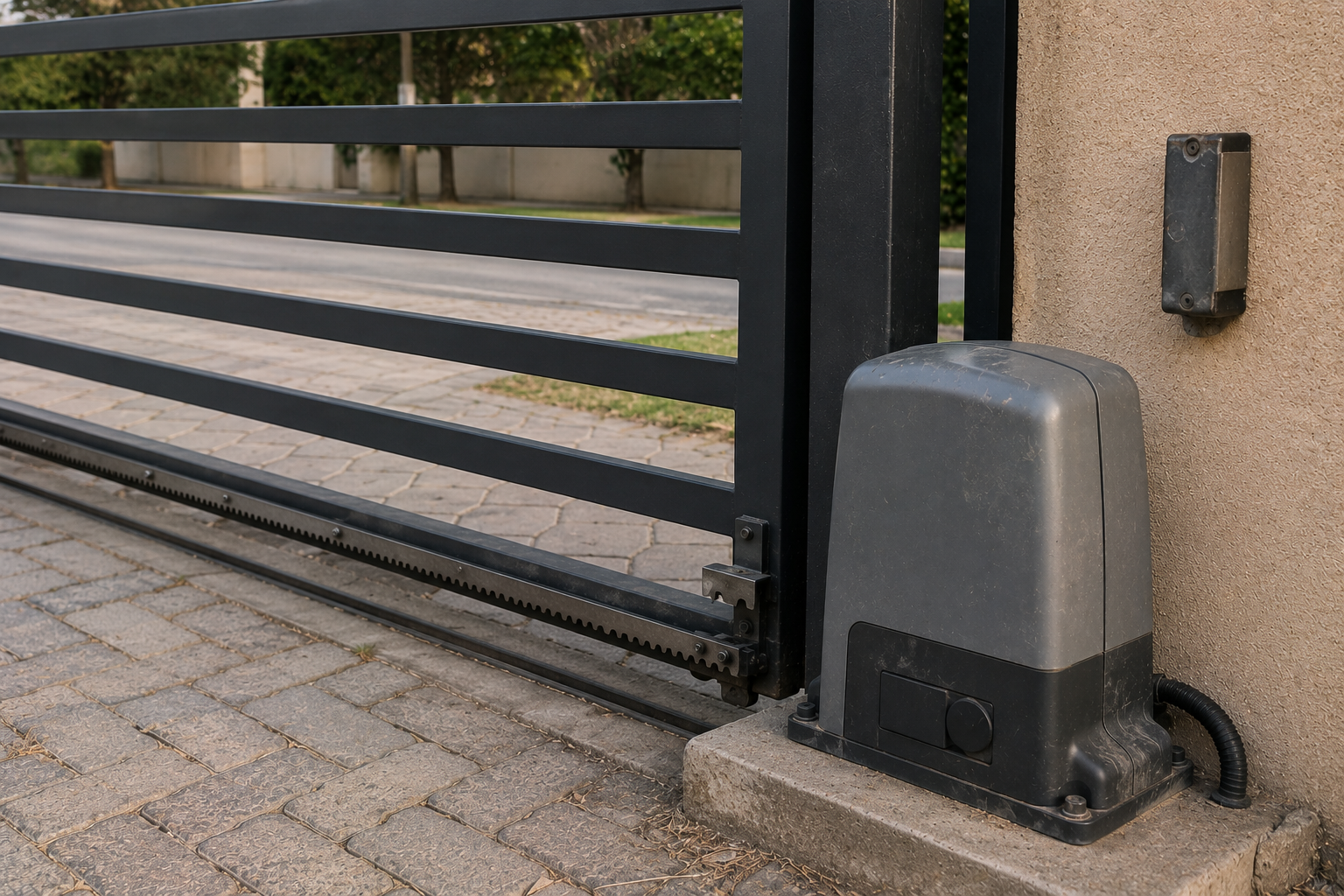
A gate that suddenly stops halfway and reverses can be frustrating, especially when you are trying to leave home in a hurry or secure your property at night. In many cases, the problem starts intermittently before becoming more frequent over time. One day the gate works normally, and the next it refuses to complete the closing cycle properly.
For many Gauteng homeowners, this issue becomes particularly stressful during load shedding or bad weather when reliable gate access is most important. The good news is that a gate reversing unexpectedly does not always mean the motor has failed completely. In fact, this behaviour is often caused by the gate motor’s safety systems detecting resistance or sensing a possible obstruction.
Modern gate motors are designed to reverse automatically when something interferes with normal movement. This prevents damage to the motor, protects the gate system, and improves safety. However, when components become worn, misaligned, or overly sensitive, the motor may start reversing even when no real obstruction exists.
Understanding what usually causes this behaviour can help identify problems early before they become more serious and expensive to repair.
Book Professional Gate Motor Repairs
Why Gate Motors Reverse Automatically
Most modern gate motors include built-in safety features that monitor resistance while the gate moves. If the system detects unusual pressure, strain, or obstruction during operation, the motor automatically stops and reverses direction.
This feature is important because it helps prevent injuries, protects vehicles, and reduces the risk of mechanical damage. Without it, a gate could continue forcing itself closed against an object or person.
The problem is that the motor cannot always distinguish between a genuine obstruction and mechanical resistance caused by faults within the gate system itself. Something as simple as a worn roller, dirty track, or alignment problem can trigger the reversal mechanism repeatedly.
In many situations, homeowners assume the motor itself is faulty when the real issue lies elsewhere in the gate system.
Safety Beam Problems
Safety beams are one of the most common causes of gates reversing unexpectedly.
These beams create an invisible line across the gate opening. If the beam detects movement or interruption while the gate is closing, the motor immediately reverses to prevent accidents.
Over time, however, the beam system can become unreliable. Dust buildup, rainwater, insects, direct sunlight, loose wiring, or slight alignment shifts may interrupt the beam signal even when nothing is actually blocking the gate.
This is extremely common in Gauteng, particularly in outdoor systems exposed to changing weather conditions and regular dust accumulation.
A gate may therefore begin reversing halfway through closing because the beam falsely detects an obstruction. In some cases, the problem only happens during certain times of day when sunlight interferes directly with the beam sensor.
Cleaning the safety beams and checking their alignment sometimes resolves the issue, but recurring problems often require professional adjustment or replacement.
Obstruction Detection and Resistance Problems
Gate motors are highly sensitive to resistance during movement. If the gate encounters additional pressure while closing, the motor interprets it as a possible obstruction and reverses automatically.
This resistance may come from several different mechanical issues within the gate system.
A damaged track, worn wheels, rust buildup, or uneven movement can all increase strain during operation. Some gates develop tight spots where movement becomes more difficult at certain points along the track. When the motor reaches these areas, it may stop and reverse because it senses abnormal pressure.
In many cases, the problem develops gradually. The gate may initially reverse only occasionally before eventually becoming a constant issue.
Manual testing often helps identify resistance problems. If the gate feels heavy, rough, or uneven when moved manually, there is likely a mechanical issue contributing to the reversing behaviour.
Natural internal linking opportunity: gate motor repair services often include full inspections of tracks, rollers, and alignment systems to identify hidden resistance problems.
Gate Alignment Issues
Even small alignment problems can affect how smoothly a gate operates.
Sliding gates rely on proper balance and consistent movement along the track. If the gate shifts slightly because of worn components, loose brackets, or structural movement, the motor may begin detecting unusual resistance during operation.
Some homeowners notice scraping sounds, shaking, or uneven movement before the reversing problem becomes severe. Others only realise there is an alignment issue once the gate starts stopping midway consistently.
Alignment problems are particularly common on older gates or systems that were not installed correctly initially.
Ignoring these issues can place ongoing strain on the motor and eventually damage internal components over time.
Book Professional Gate Motor Repairs
Incorrect Force Settings
Gate motors use force settings to determine how much resistance the system will tolerate before reversing.
If these settings are too sensitive, the motor may reverse even when normal operational resistance exists. If the settings are too high, the gate may continue pushing against obstructions unsafely.
Incorrect force calibration can happen after:
- electrical surges
- previous repair work
- control board resets
- poor programming
- motor upgrades
Many homeowners attempt to adjust force settings themselves without understanding how the system works. Unfortunately, this sometimes worsens the problem or creates safety risks.
Proper calibration requires balancing safety sensitivity with smooth gate operation. Professional technicians usually test the full system before adjusting these settings.
Worn Rollers and Mechanical Wear
Rollers carry the full weight of the gate during operation. As rollers wear down, the gate becomes increasingly difficult to move smoothly along the track.
This extra resistance often triggers the motor’s safety system and causes reversing during closing.
Worn rollers usually create gradual symptoms before complete failure occurs. The gate may start moving unevenly, producing grinding noises, or slowing down near certain sections of the track.
Because the motor works harder to compensate for the increased resistance, long-term mechanical wear can eventually shorten the lifespan of the motor itself.
Regular servicing helps identify roller wear before it creates major automation problems.
Problems After Load Shedding
Load shedding continues to affect gate motor systems across Gauteng in several ways.
Repeated power interruptions place strain on batteries, charging systems, and electronic components. Some gate motors begin behaving unpredictably after outages, especially older systems that were not designed for constant load shedding cycles.
Weak batteries may supply enough power for partial operation but struggle to maintain consistent closing force. In some cases, the motor loses programming settings or develops intermittent control board faults after surges.
This may cause the gate to reverse unexpectedly, stop midway, or behave inconsistently throughout the day.
Properties experiencing frequent electrical instability often develop recurring gate motor problems that become progressively worse over time.
Natural internal linking opportunity: homeowners experiencing ongoing electrical issues sometimes explore gate motor replacement options for improved reliability during load shedding.
When Reversing Indicates More Serious Motor Problems
Sometimes the reversing problem is not caused by external resistance at all but by internal motor deterioration.
Older motors may develop worn gears, overheating problems, weakened components, or failing control systems that interfere with normal operation.
There are certain warning signs that usually indicate professional repairs are needed.
- The gate reverses repeatedly without obvious resistance
- Grinding or clicking noises are becoming louder
- The motor overheats regularly
- The gate stops at random positions
- Reversing problems are becoming more frequent
- The system behaves differently after load shedding
- The gate feels increasingly difficult to move manually
Ignoring these warning signs may eventually lead to complete motor failure.
Professional diagnosis is important because reversing problems often involve multiple contributing factors rather than a single isolated fault.
Preventing Future Reversing Problems
Many reversing issues can be prevented through regular servicing and early maintenance.
Keeping the track clean, checking rollers, monitoring battery condition, and inspecting safety beams regularly can significantly reduce the risk of unexpected failures.
Professional servicing is especially important for properties where gates operate frequently throughout the day. High traffic usage places additional strain on both mechanical and electrical components.
Good installation quality also plays a major role in long-term reliability. Gates that are properly aligned and correctly automated usually experience fewer resistance-related problems over time.
Addressing small issues early often prevents larger repairs and extends the lifespan of the entire automation system.
Conclusion
A gate that stops halfway and reverses is usually responding to resistance, obstruction detection, or safety system interference somewhere within the automation setup. While the problem may sometimes be minor, repeated reversing should never be ignored for too long.
Safety beam faults, alignment problems, worn rollers, incorrect force settings, and load shedding-related electrical issues are all common causes of this behaviour.
Identifying the issue early helps prevent additional strain on the motor and reduces the risk of larger repair costs later. In many cases, professional inspection is the fastest way to identify the true source of the problem and restore smooth gate operation.
0 Comments